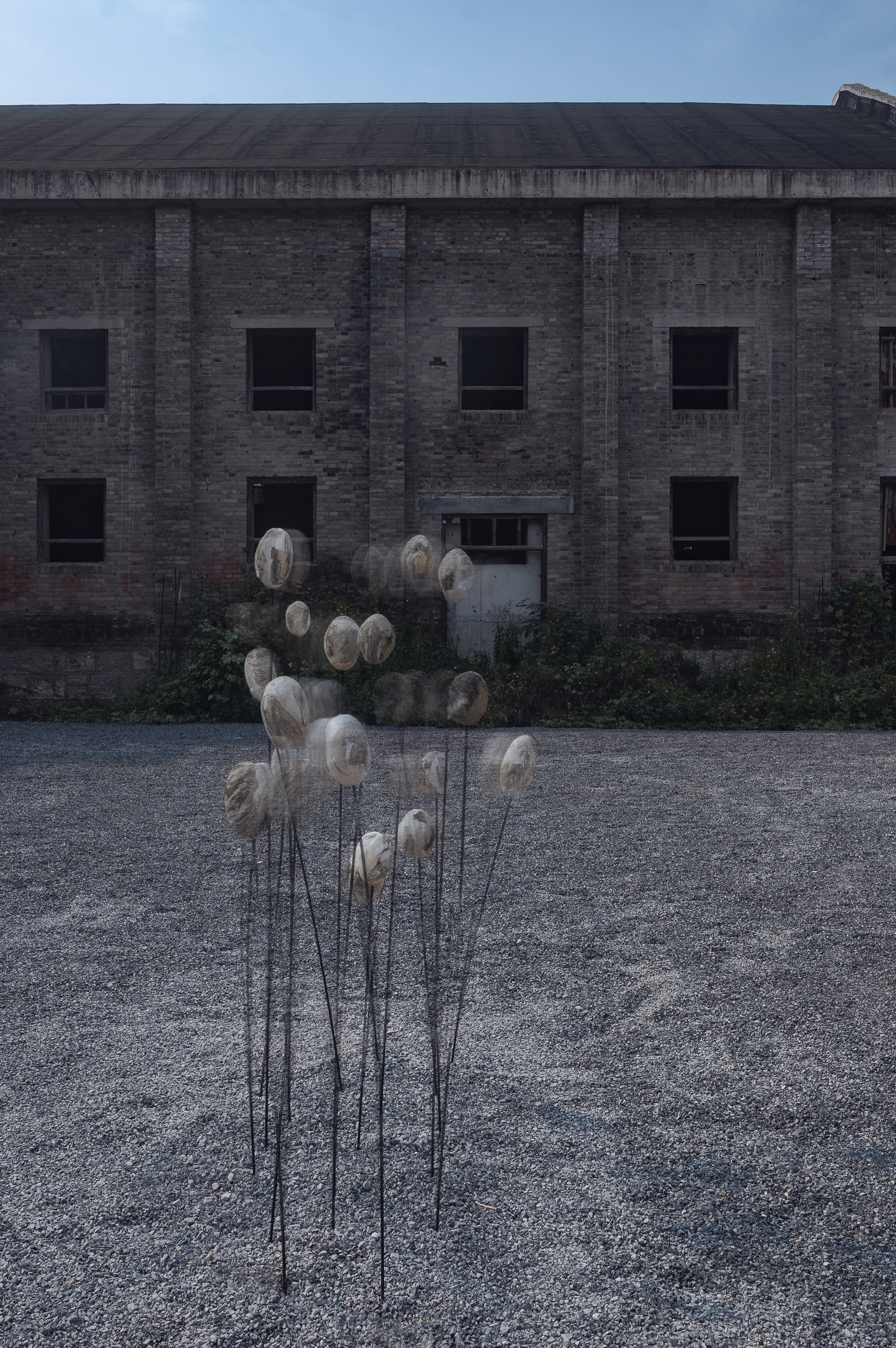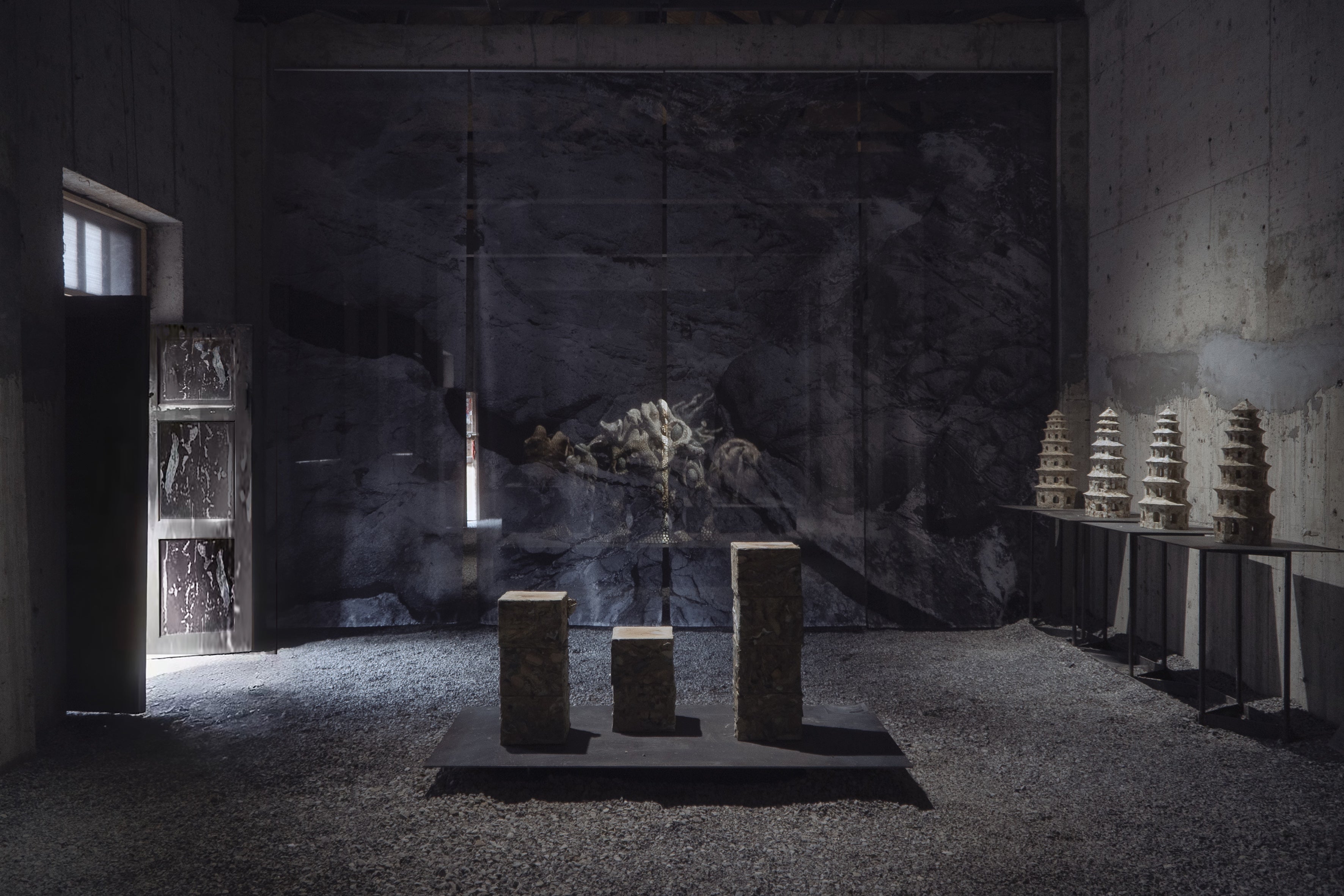
Matters within
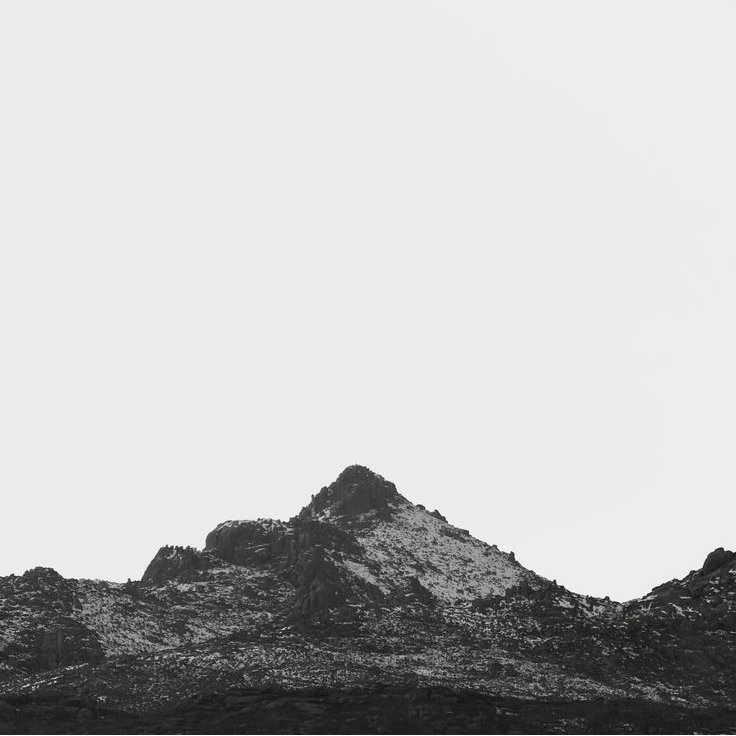
Glaciers, Rocks, Clay, and Ceramics as Materials
Glaciers, rocks, magma, clays and ceramics, they are substances that are constantly in action and being generated, just like us. They have a longer timeline, a different destiny and future. I long to understand inorganic matter as much as I want to understand my own existence. What can we see in the midst of matter?
I hope to answer this question through art. This journey involves a rethinking of geology, biology and aesthetics in matter, an excavation of the hidden connections between the material world and artistic expression, with the aim of exploring how the material world around us can be transformed into an aesthetic object that embodies the essence of our existence.
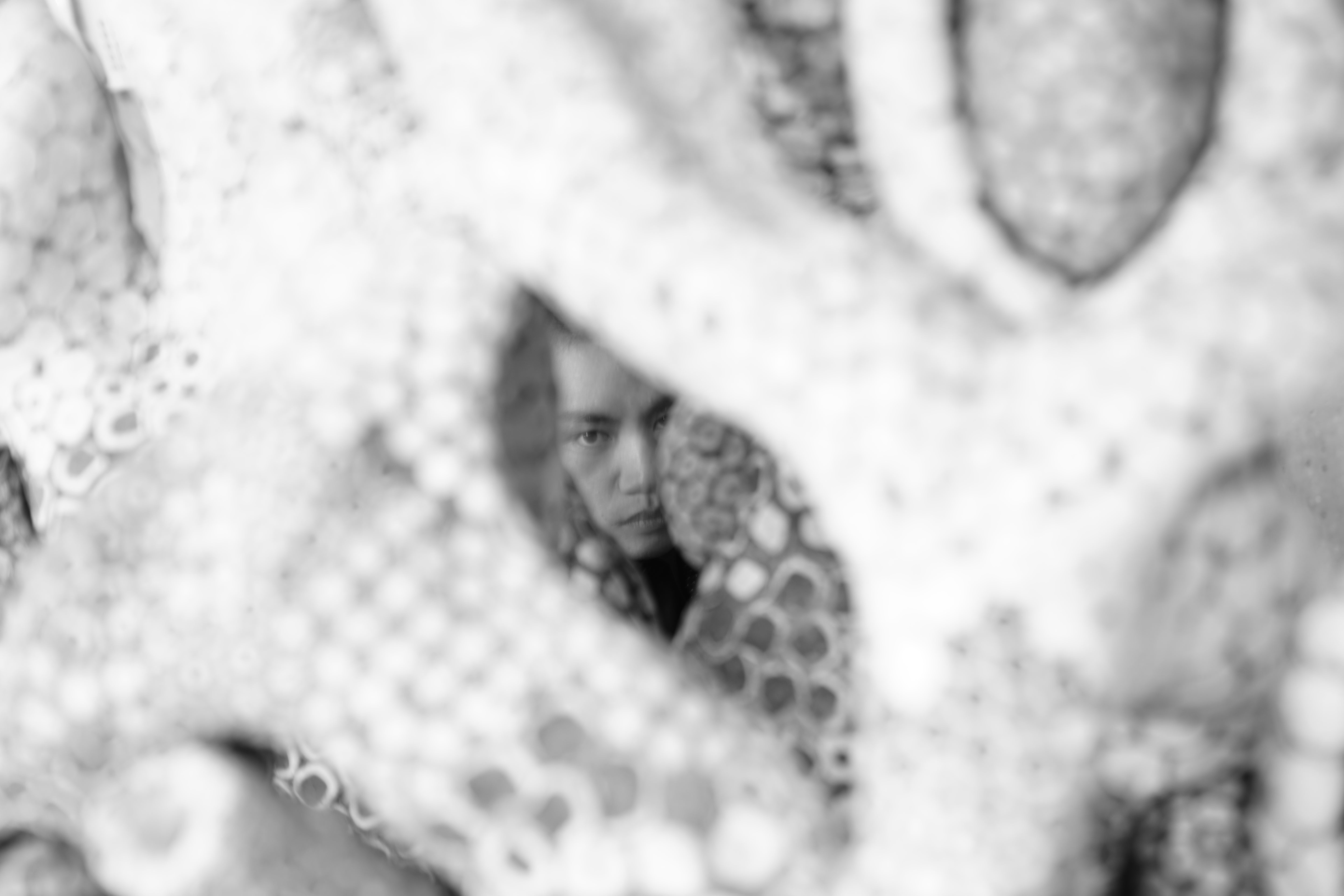
Artist Statement
Imagination of Matter
As a ceramic artist, I used to take clay for granted, without considering the history and principles it carries as a material. However, after learning about the Bowen reaction series and the principles of ceramic sintering, I gradually realized that there seems to be a subtle connection between magma and minerals, rocks and clay, and even ceramics and the Earth. This has led me to seek new artistic concepts and inspirations through further study and practice.
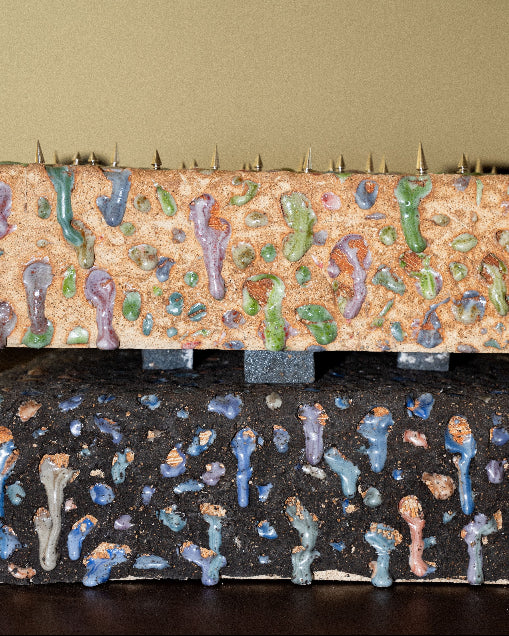
In geology, rocks melt into magma due to the high temperatures, pressures, and mixing of various substances within the Earth. As magma cools, it crystallizes into a variety of minerals according to the Bowen reaction series. These crystallized minerals, with their rich colors, diverse forms, and unique textures, offer endless possibilities for artistic creation.
The main raw materials for ceramics include quartz, feldspar, and clay. Quartz and feldspar are typical examples of the aforementioned crystallized minerals, while clay is formed from the weathering and sedimentation of rocks. Ceramics serve as a witness to geological evolution, recording the objective history of the Earth's geological movements and activities. At the same time, due to their material sensibility and the involvement of cultural history, ceramics have also become objects of aesthetic appreciation.
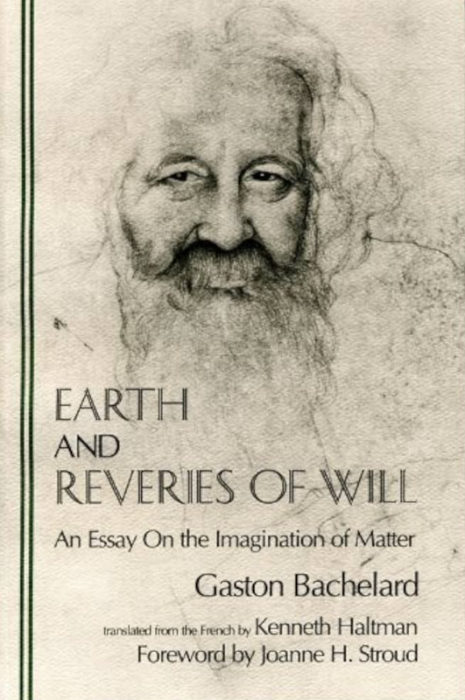
Gaston Bachelard (1884–1962), in Earth and Reveries of Will: An Essay on the Imagination of Matter, analyzes the primordial images and reveries associated with earth-bound matter. He argues that the dialectic of hardness and softness resonates with a most original instinct: the impulse to resist the world. In the potter’s labor, through sustained resistance and struggle, weight and depth become manifest. Material reverie thus finds its counterpart in material substance, allowing us to discern—through objects—the inner qualities and origins of imagination and perception.
For Bachelard, the “reconciliation” of soft and hard matter in the earth is, in essence, a hostile contest of resistance. Accordingly, makers who create—whether blacksmiths or potters—use their own will to challenge resistant material, injecting emotion and expectation into tangible form through conflict. In these labors—devoid of gentle reverie or conventional poetic softness—what emerges is the most intense contradiction between earth and will.
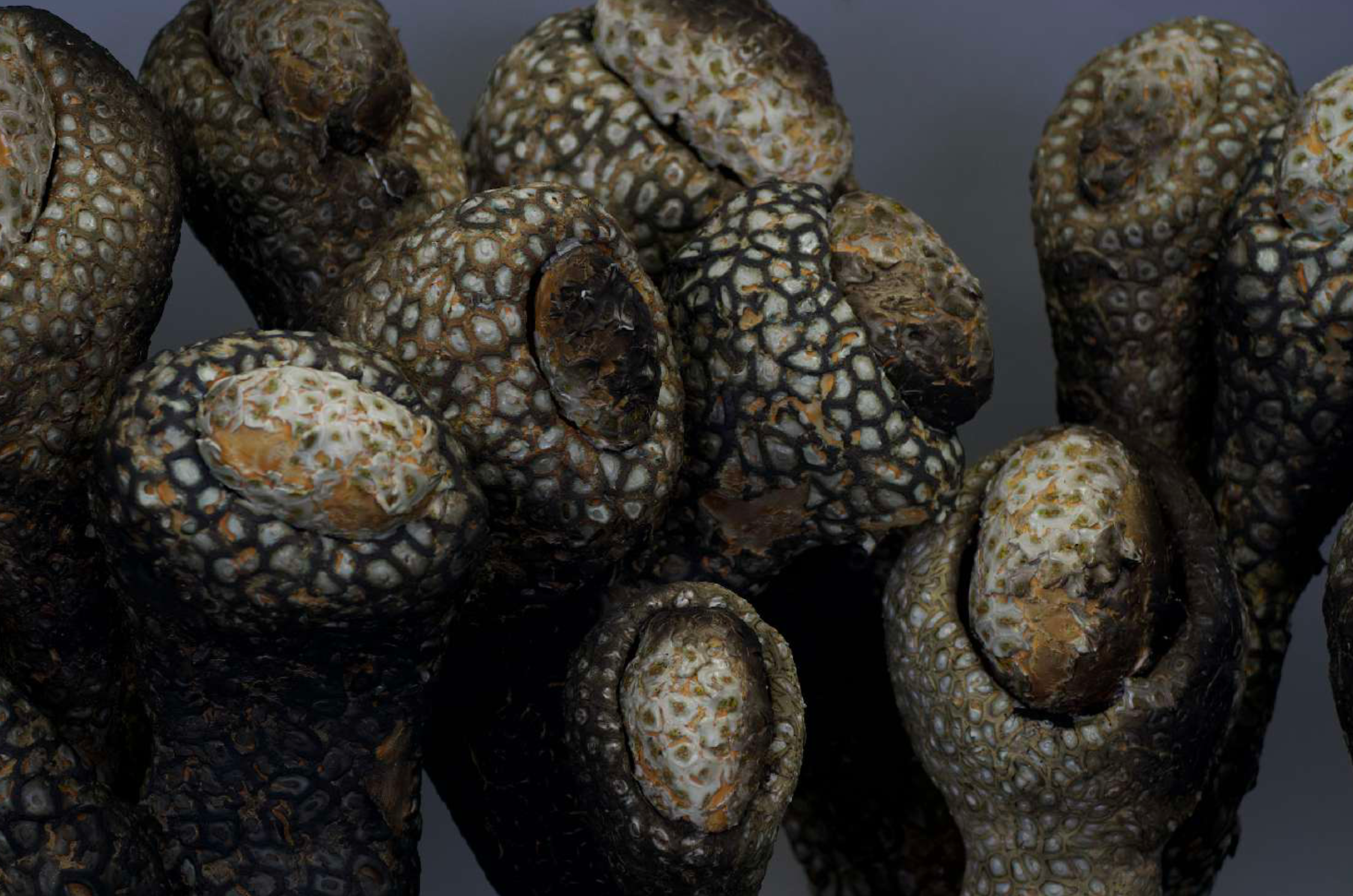
No ceramic artist can escape the gaze of clay. At the worktable, we are watched by it. It poses the deepest question to me: “Can you truly see me, truly touch me?” When we manipulate clay with our hands, how do our eyes and our minds interact? What is it that we are shaping—and what is it that we are imagining? If we cannot resolve these most fundamental questions, how can we take the next step: to generate and create a real material body, and to understand everything it contains and reveals?
This world, too, is a kiln. We are always suspended within countless signals of energy transfer. Oxidation or reduction is simply another rhetoric for evolution—for transformation. And clay, in its own substance, resists toward eternity, further expressing a resolve for immortality and endurance. It is for this reason that all reveries of water, wind, air, and fire can find a ground to cling to and take form. They are held within clay, sending a silent resonance into the vast universe—through the firmest, and also the most arduous, way possible.
Introduction
Matters Within
This was the first work I made in 2023. It marked the beginning of this series and a turning point in my artistic path. My technique is inspired by Jiao Tai, a traditional ceramic method that originated in the Tang dynasty and gradually disappeared after the Jin–Yuan period. Unlike many other ceramic techniques, Jiao Tai does not rely on painted decoration or glaze; instead, it uses different kinds of clay to generate patterns and carry artistic expression from within the body.
In my practice, I add mineral powders and metal oxides to the clay to create a distinct material presence. Once reshaped and reconfigured, the clay becomes both mysterious and intimate, offering my work another way of understanding matter—and the world—through making.
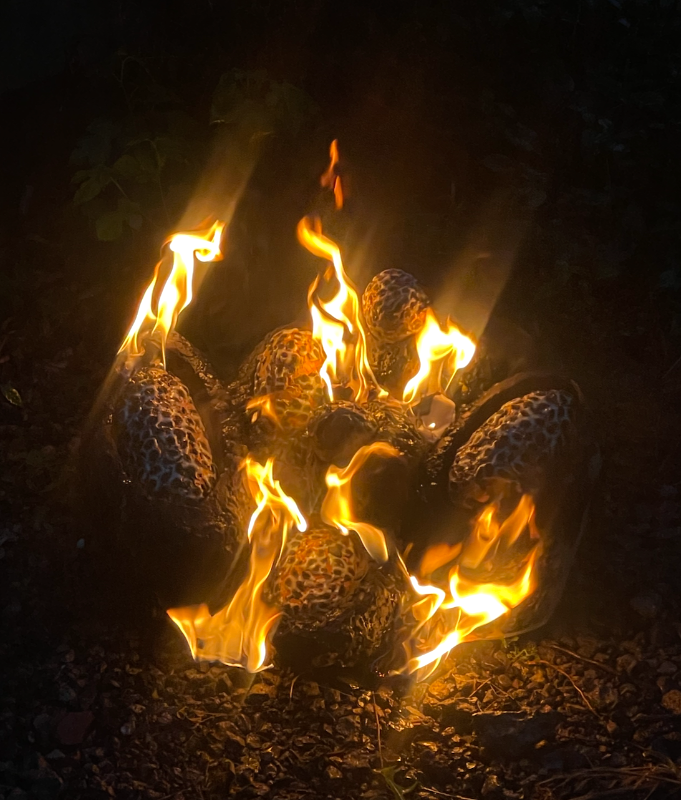
During this period, I began to consciously unsettle the fixed ways a ceramic artist is taught to think about clay, and to consider its material properties and cultural character from an ontological perspective. Influenced by the French philosopher Gaston Bachelard, I started to imagine the meanings and reveries that clay unfolds for us.
Minerals carry an ancient reverie of vitality—a force that is both the slowest and the most tenacious. They labor within a concealed time, growing and shaping themselves in silence. In the act of making, a dream appears within their soul, releasing a faint breath of the earth.
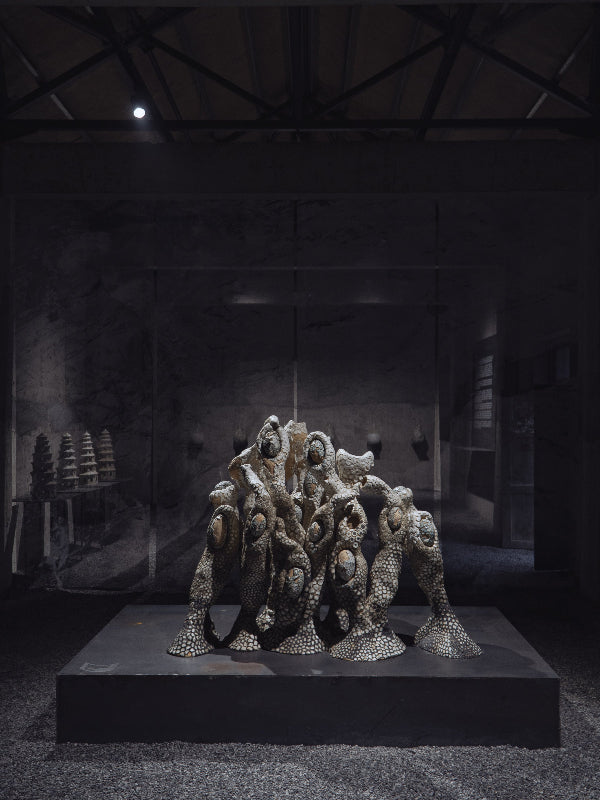
In Nishida Kitarō’s writings on aesthetics, he suggests that the objective and subjective historical reality in which we exist is formed through artistic creation. Artistic creation is not merely an isolated event; it is a core energy that sets other actions in motion and runs through them. In other words, art is not a static representation, but an originating act that generates reality and history.
Returning to the land on which we depend, it too is formed through long geological processes—shaped by multiple energies and actions over time. Our existence is likewise not simply a singular event, and the subject of artistic creation is not confined to human will and agency alone. In my reveries on earth and matter, I place myself within their body as well, in order to sense the generative force of creation that they share with us.
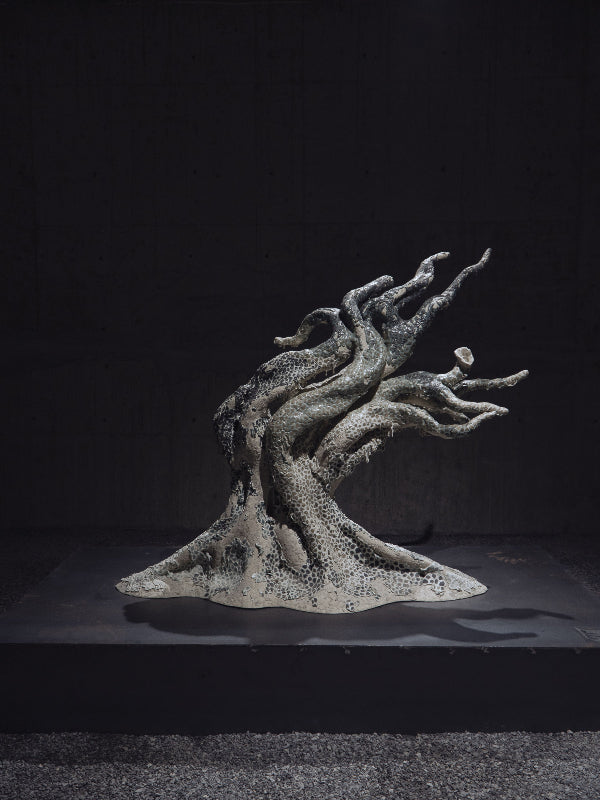
“Blissful realms and realms of suffering;
gold and jewels and mud and sand;
the hope of the womb-prison toward the lotus pond;
thorns and brambles compared to jade-like trees.”
— Commentary on the Contemplation Sutra (Guan Wuliangshou Jing Shu)
This passage originates from the Contemplation Sutra (Guan Wuliangshou Fo Jing) and is used to contrast the fundamental difference between the Pure Land and the human world. Yet within this tension of binary opposition it also implies an ultimate state of unity and harmony. The “womb-prison” is both the confinement of birth and an opening for the mind: it suggests that the end of suffering is nirvana and liberation. It also conveys the Pure Land teaching of the “mind–land correspondence”—that when the mind is pure, the land is pure; when the mind is defiled, the land is defiled. Whether one perceives gold and jewels or mud and sand is not determined by an objective external reality, but by the inner images formed in the viewer’s mind.
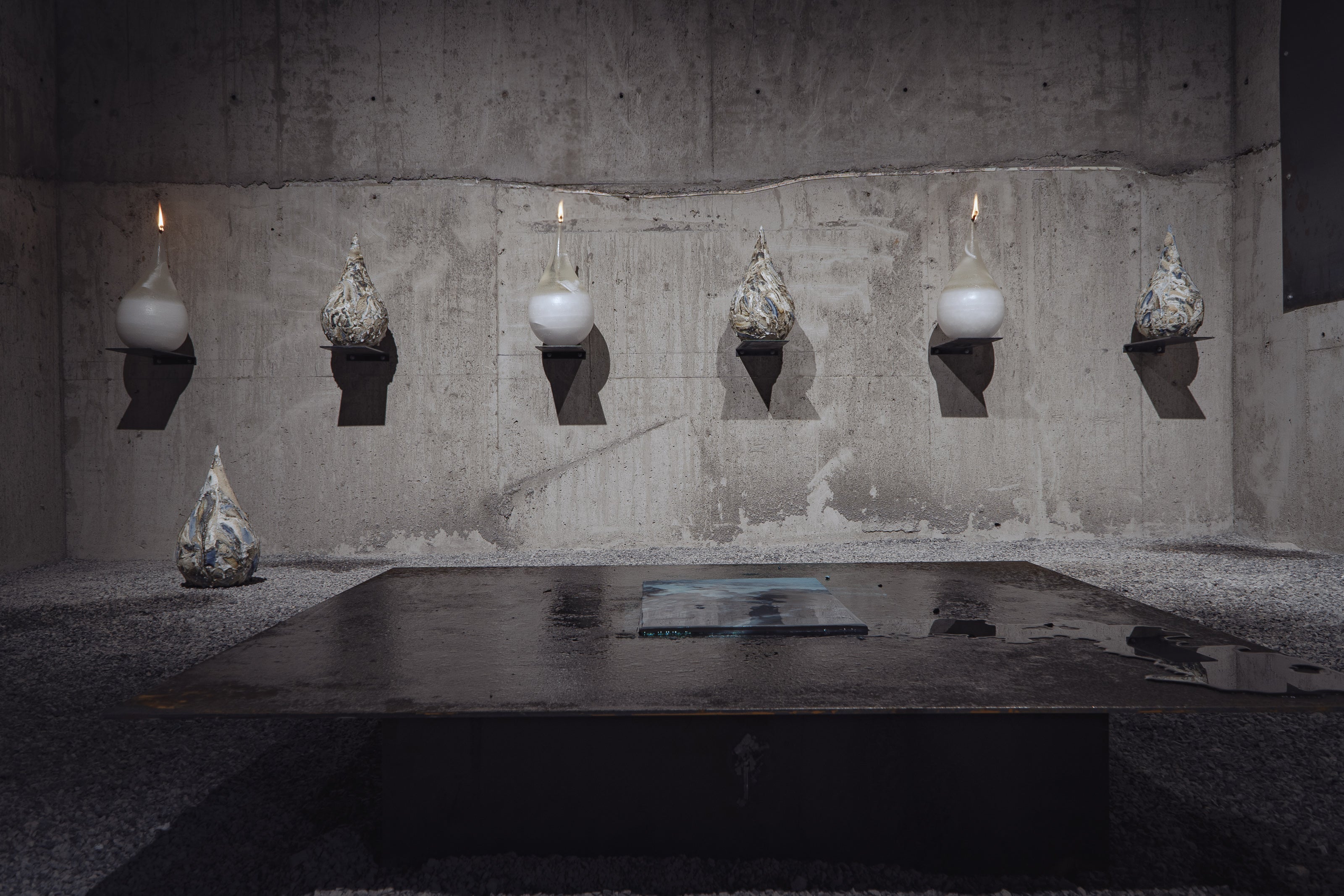
Nishida Kitarō also proposed the theory of “absolute nothingness.” For him, absolute nothingness is not a negation of being, but a creative field of self-emptying in which all things can appear freely. Rejecting the Western binary opposition between existence and nihil, Nishida understands “nothingness” as a generative force that contains every possibility.
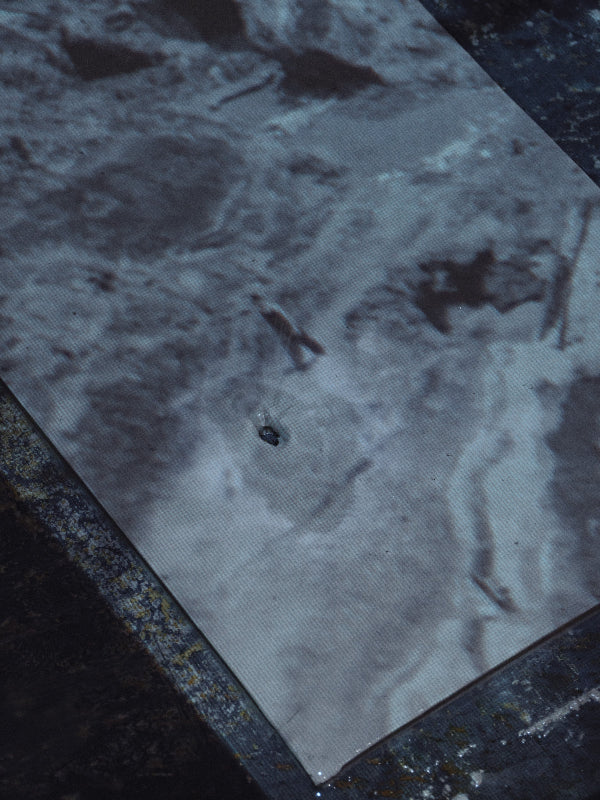
In my work, I project moving images onto an unfired clay slab, allowing the image to enter—temporarily—into a solid material body. Over time, water drops dampen the clay, breaking down its structure, dissolving it into liquid, and carrying it away. All images and meanings vanish as the clay disappears. A burning candle and ceramic objects on the wall further suggest that after both image and matter have dispersed, the question remains: is this the final end, or another field of becoming—another site of generation?