Path of Pattern
part. 1
The Global History of Jiaotai Since Tang–Song China
Taking Jiao Tai (marbled clay / agateware) as a point of origin, I trace the routes through which Jiao Tai travelled into East Asia and Europe via transportation networks, trade, and cultural exchange. Across different civilizational contexts, it was renamed and reinterpreted, developing technical knowledge and aesthetic approaches that reflected the conditions of each era. For me, this is not only a history of circulation, but also an act of cultural writing and re-narration.
Grounded in a decade of sustained observation and research, this project uses Jiao Tai as a lens to reconsider the historical significance of craft: how it is shaped by shifts in institutions, technologies, and ways of living, and how, in turn, it preserves experience through gesture and the material memory carried by the hand.
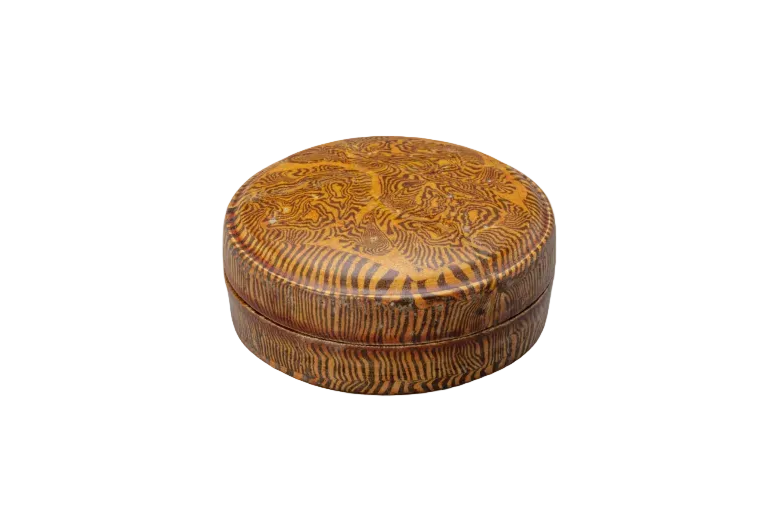
Tang Dynasty (618 – 907)
Jiao Tai
Jiao Tai can be regarded as an early high point in the history of this technique. At kilns such as Xing and Gongyi, artisans kneaded clays of different colors together to form patterns—most commonly woodgrain, key-fret, and rosette motifs. Under a yellow glaze, these textures appear and recede, carrying a spirited, expansive character.
Jiao Tai did not belong to the official court kilns; it was closer to a vernacular invention developed by local potters. Yet because of its rarity and technical difficulty, it entered elite contexts—used for court appreciation and in high-ranking temples.
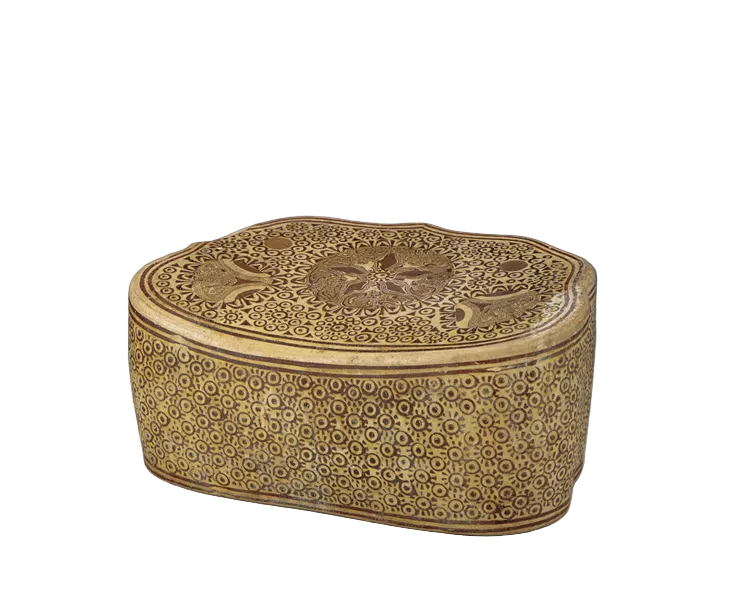
Song Dynasty (960 - 1279)
Jiao Tai
Song-dynasty Jiao Tai became more restrained, aligning with Song ideals of minimalism and the literati aesthetic: repeating structures such as feather and wheat-ear motifs grew clearer, while glazes shifted from colored finishes toward transparent coatings to emphasize the body’s internal texture.
As transportation networks, trade, and cultural exchange intensified, Jiao Tai circulated more widely and gradually entered broader systems of use and exchange.
After the Jingkang Incident and the ensuing Song–Jin turmoil, many northern kiln sites were damaged and potters migrated south, and Jiao Tai slowly receded from the historical stage.
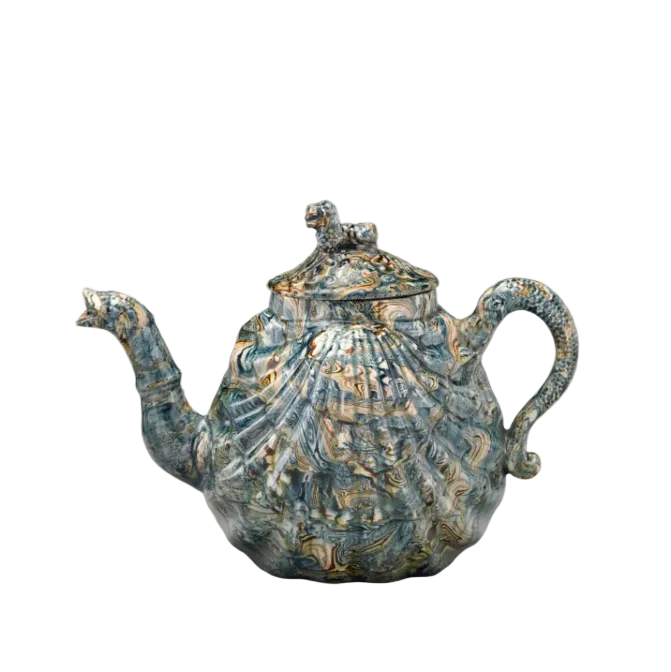
England (1675 - 1775)
Marbled Stoneware
In late 17th-century Britain, amid the scientific revolution and the rise of the Royal Society, experimental methods began to permeate artisanal production. Around 1675, John Dwight fired what he called “Marbled Stoneware”—a Jiao Tai–like marbled ware—systematically testing colored clay bodies, shrinkage rates, and firing temperatures to solve cracking, and it soon became a coveted luxury among the elite.
In the 18th century, Staffordshire both sustained wheel-throwing traditions and developed molded marbled ware (c. 1750–65, including 1755), gradually moving toward more ordered, geometric patterning. In parallel, the Wedgwood system advanced ceramic material science and industrial production; Wedgwood & Bentley introduced agate-like marbled wares in 1775, marking the technique’s reconfiguration and consolidation in the industrial era.

United State (1850 - 1950)
Scroddled Ware
In Vermont, the United States Pottery Company at Bennington produced “Scroddled Ware,” kneading multicolored clays to create marble-like bodies. The company was registered and operating by 1853, and its wares received strong press praise at the 1853 New York Crystal Palace Exhibition, becoming a symbol of “American progress” in art and skill.
After the company’s decline toward the end of the 19th century, multicolored marbled bodies waned; in the early 20th century, with the revival of the Arts and Crafts movement, the technique returned to public attention as a language of material truth and handmade texture.
Notably, Arkansas’s Eagle Pottery operated from 1909 to 1946 and produced the “Mission Swirl” series; related works can still be found through around 1950.
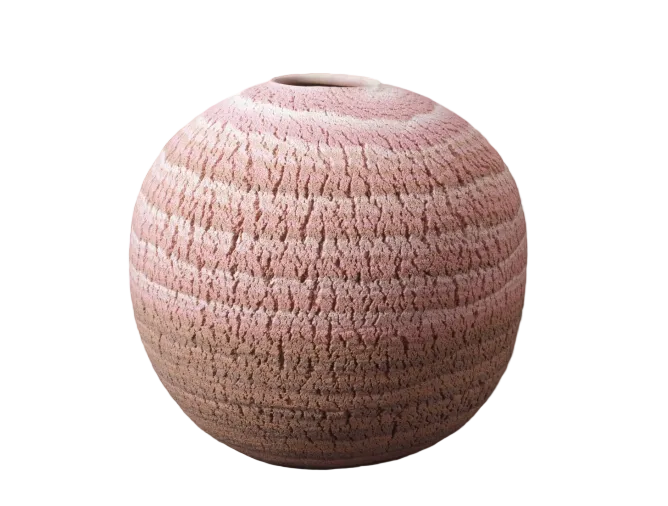
Janpan (1914 ~ now)
Nerikomi / Neriage
Japan’s relationship with Jiao Tai—known locally as Neriage (練上)—is both early and belated. Archaeological finds suggest that fragments of marbled ware were already present in Japan between the 7th and 10th centuries.
After the Meiji Restoration (from 1868), the modernization of craft accelerated. In 1914, the court ceramist Suwa Sōzan encountered marbled fragments while researching Goryeo kiln sites in Korea and successfully reconstructed the technique, becoming a key point of departure for its modern revival.
In the 20th century, the Mingei movement and the postwar avant-garde ceramics milieu helped establish Neriage as a contemporary language. Matsui Kōsei, deeply engaged with the technique from the 1960s onward, was designated a Living National Treasure in 1993 for “Neriage-te,” and Itō Sekisui received the same designation in 2003 within the Mumyō-yaki tradition—formally positioning Neriage as a nationally recognized intangible heritage and a major aesthetic in modern Japanese ceramics.
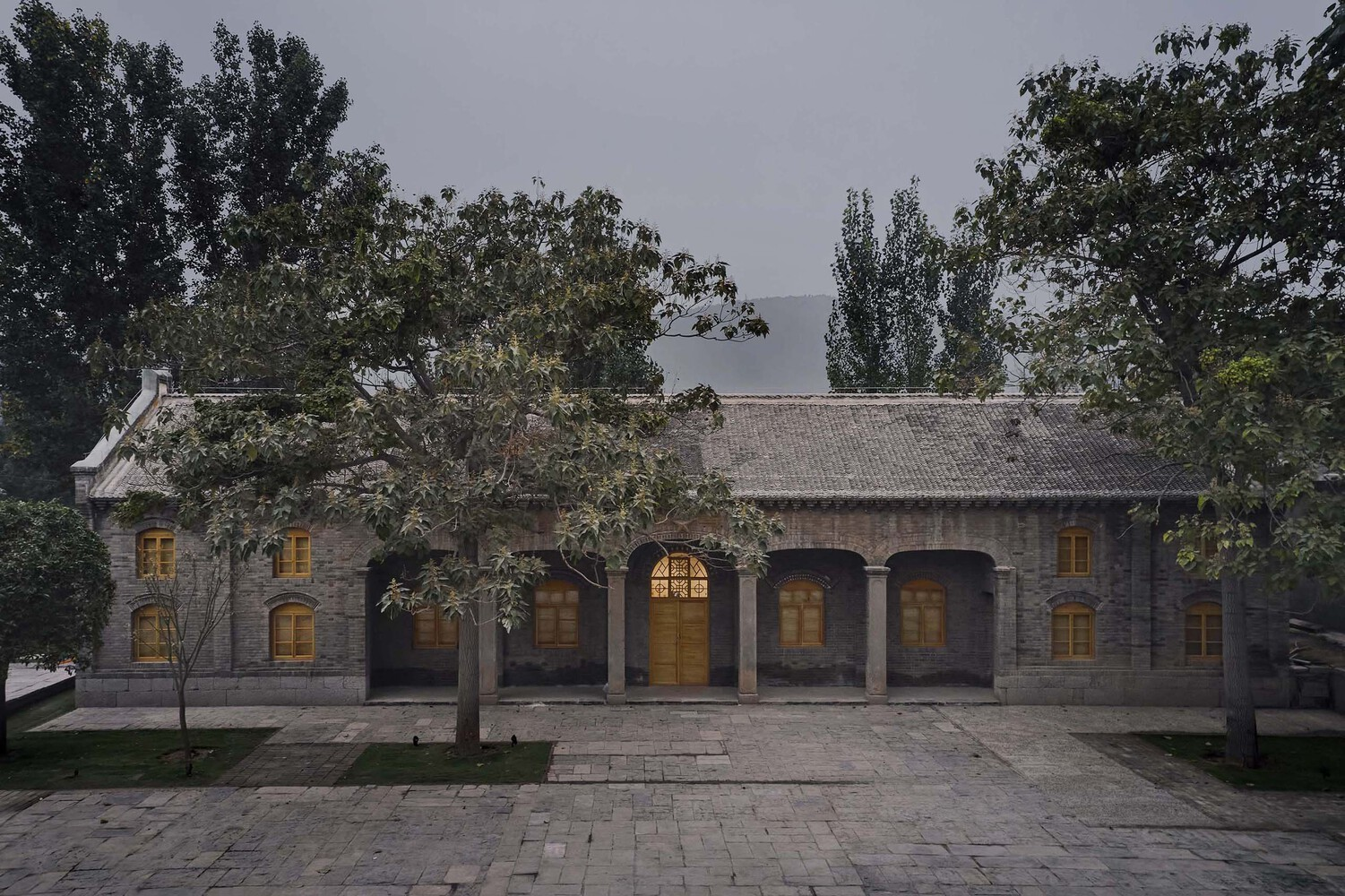
A homecoming journey
In 2025, I co-founded the Qianwanjian Art Center with Zuo Jing at the birthplace of the Jiao Tai (marbled clay / agateware) tradition, hoping to take Jiao Tai as a point of origin through which to trace the roots of China’s indigenous aesthetics.
For the first time, I also presented a systematic account of my past decade of research—both a literature review and a body of artistic practice—seeking to let Jiao Tai’s aesthetic spirit return to its own body, and to begin a homecoming journey.
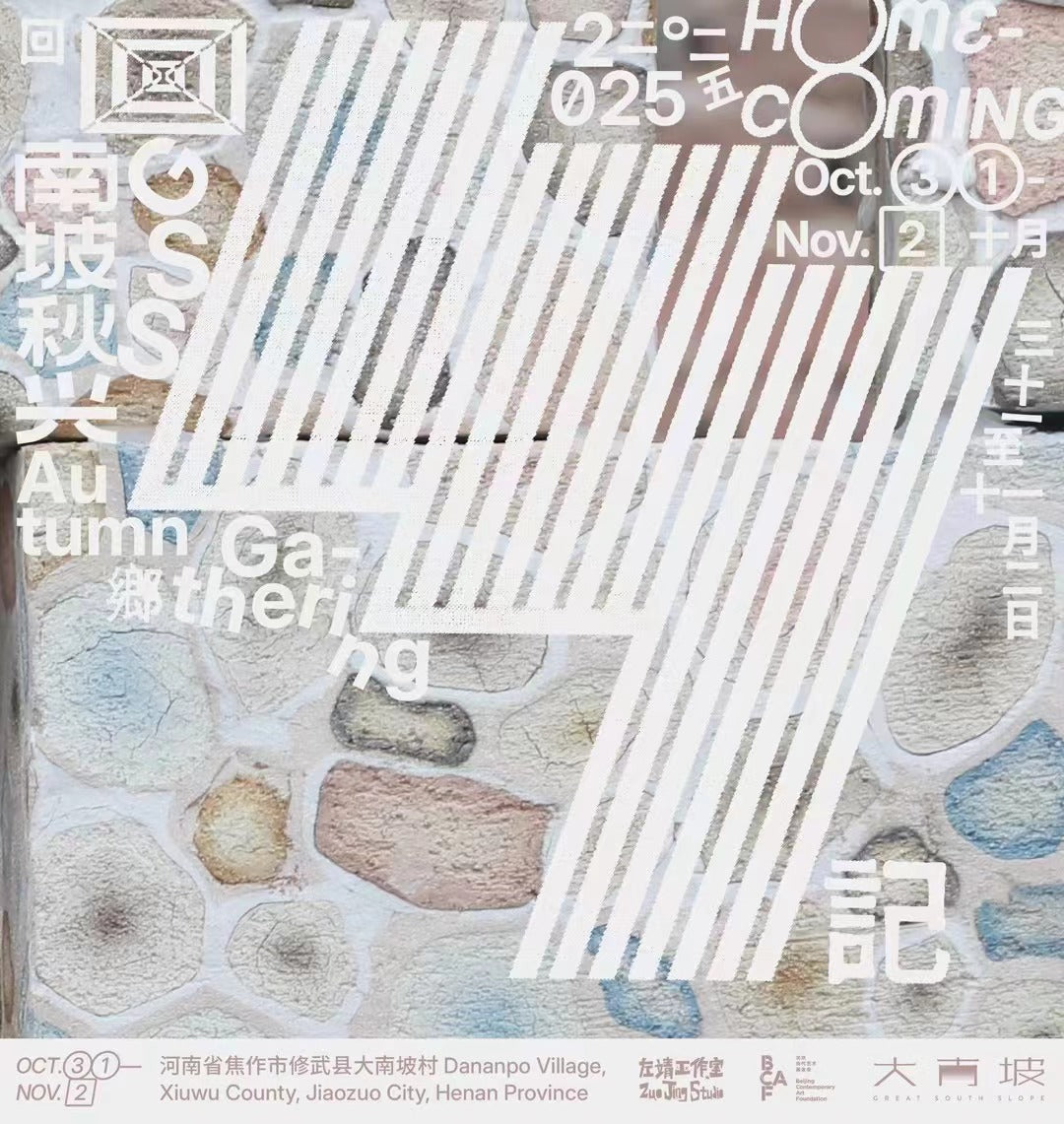
At the 5th “Nanpo Autumnal Gathering · Homecoming” program, we invited curators He Yining and Wang Huan to give a lecture and join a public conversation, exploring the themes of “heritage, innovation, and the global context,” as well as “the land, the vernacular, and indigenous aesthetics.”
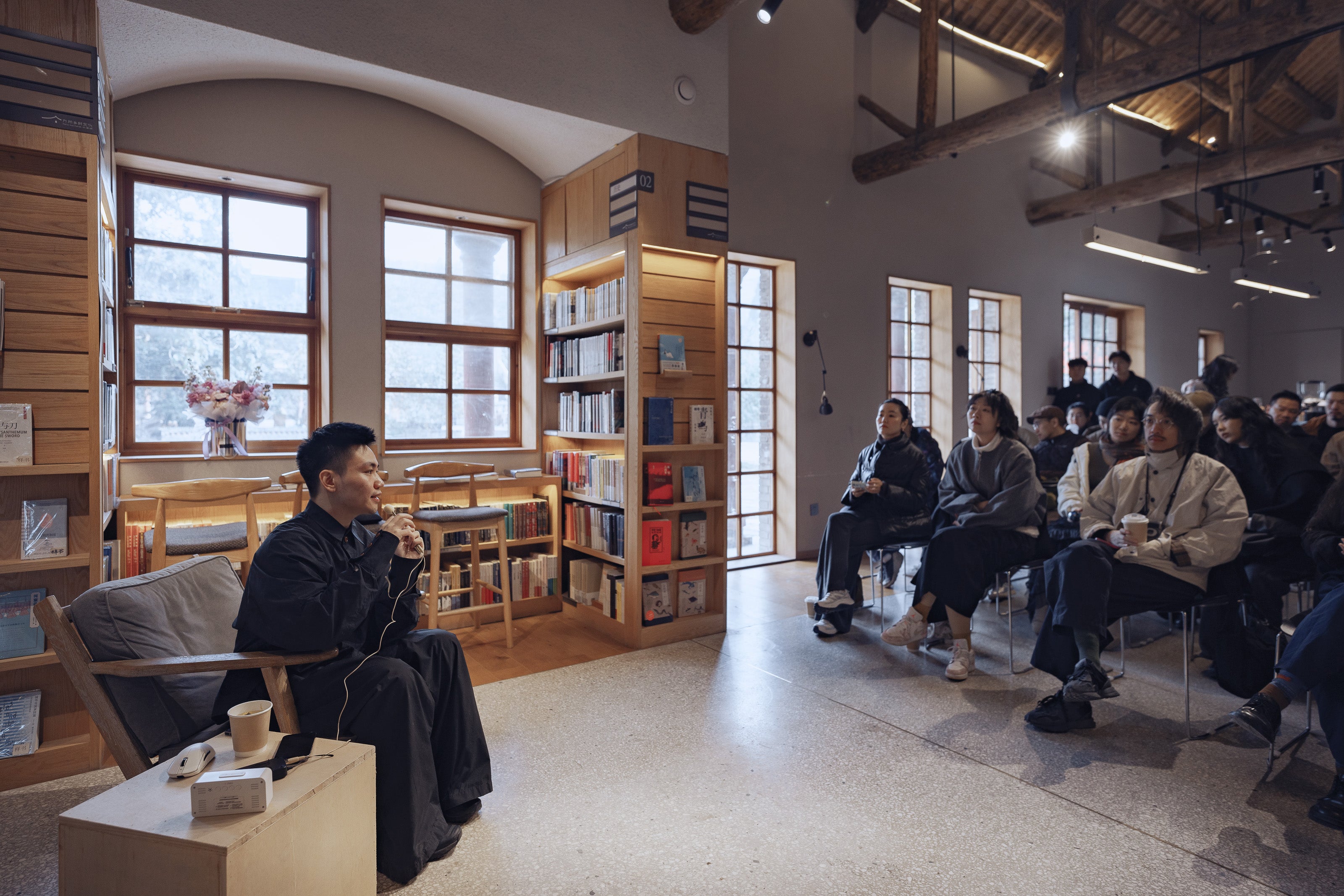
In the lecture, I introduced the trajectories through which the Jiao Tai technique circulated and developed across China, the UK, the United States, and Japan.
Using representative works from different periods, I discussed how historical conditions shaped the formal language and aesthetic orientations of Jiao Tai.
I also approached the subject through material aesthetics and cultural context, interpreting the internal links between its visible textures and the cultural structures they embody—treating Jiao Tai not only as a technique, but as a readable thread of history and ideas.
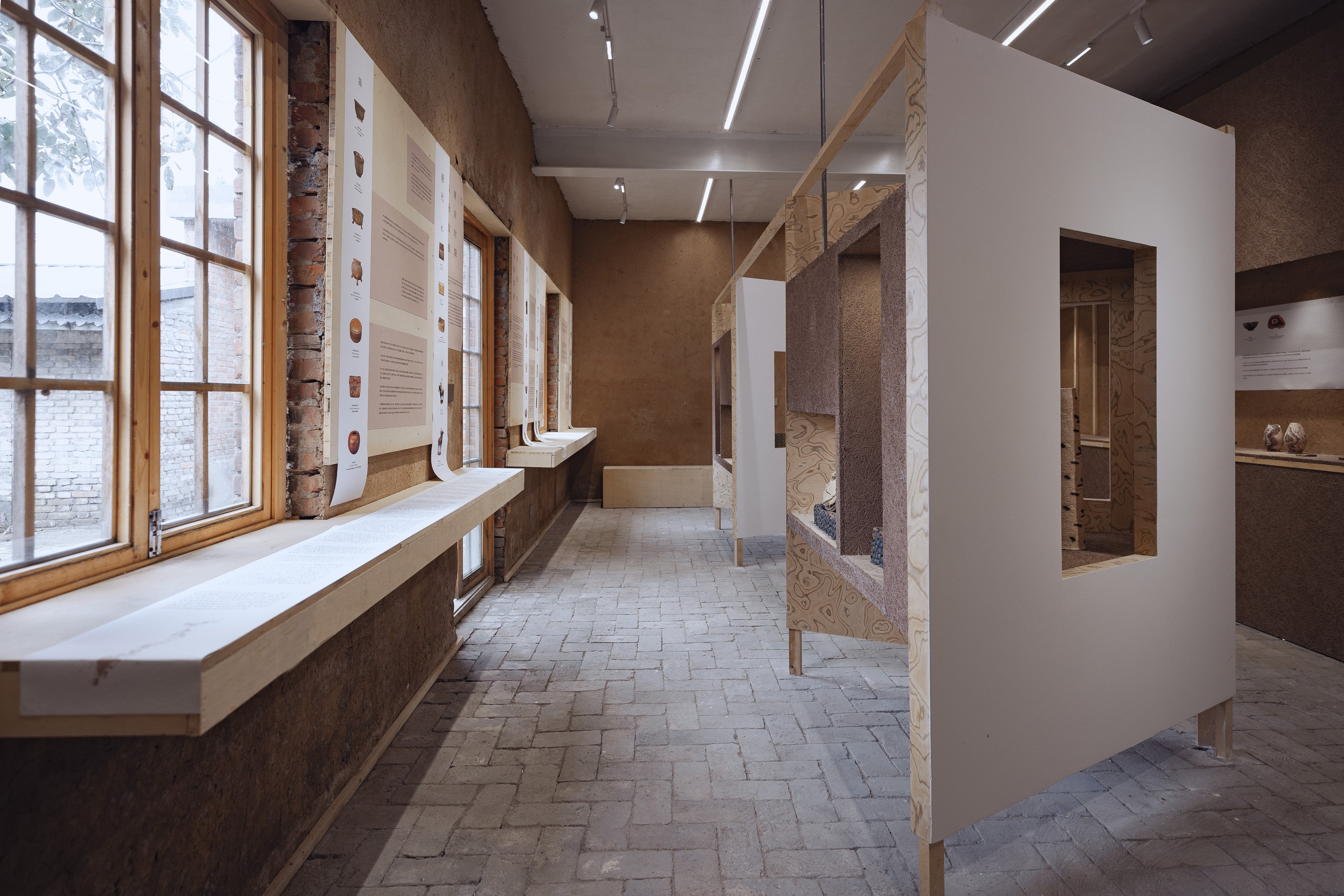
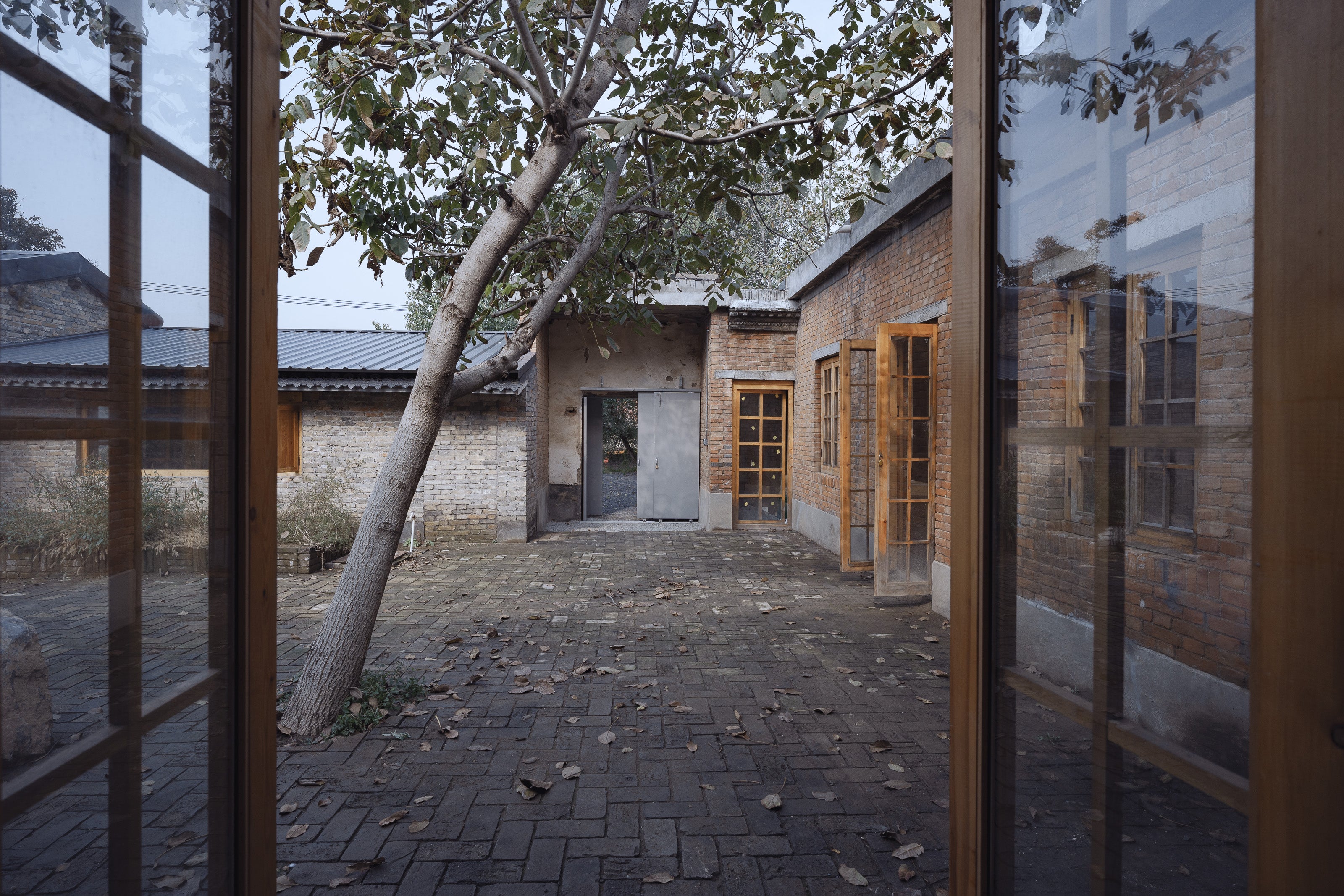
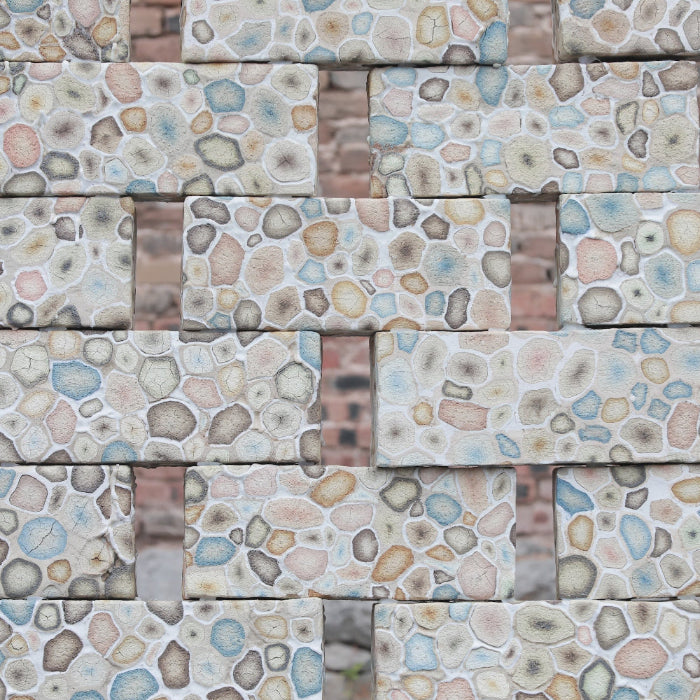
In the birthplace of the Jiao Tai, Xiuwu County, I renovated a village house and transformed it into a space that brings together an exhibition gallery, an artist residency center, and an art shop.
At our first public launch, I presented a systematic release of Jiao Tai–related research materials and staged an exhibition based on this archive, marking the project’s starting point and its first public presentation.
Part. 2
Interdisciplinary Practices in Jiao Tai
Since the Tang–Song period, Jiao Tai has developed distinctive aesthetic systems and social meanings across different regions and historical moments. Situated within the contemporary context of craft in China, we take “craft logic” as our point of entry—bringing traditional intangible heritage into closer proximity with everyday life today, and exploring Jiao Tai’s potential across a broader field of cross-disciplinary practice.
Centered on Jiao Tai’s material organization and its mechanisms of texture formation, this project seeks dialogue with glass, woodworking, metalwork, and textile practices, and extends further into moving image, literature, and wider fields of the natural sciences, the humanities, and the social sciences, in order to identify shared principles and new pathways for innovation across different media.
Jingxian, An-hui (960 - 1368)
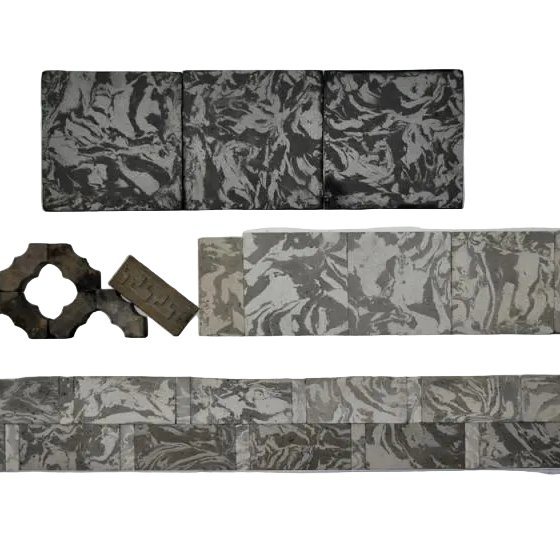
Jingxian Bricks
Jingxian “patterned bricks” (huazhuan) originate in Jingxian. Made by mixing yellowish local earth with kaolin and repeatedly kneading the body, the bricks are fired and then water-polished, producing ink-wash-like textures in interwoven blue-white tones.
The technique dates back to the Song–Yuan period, flourished in the Ming–Qing era, and has continued for nearly a millennium. As architectural materials, huazhuan are widely used on walls, around doors and windows, and along eaves, becoming a signature element of Huizhou architecture.
Today, the craft is recognized as provincial-level intangible cultural heritage, and continues to be preserved and promoted through heritage architecture restoration and cultural landscapes, while also offering inspiration for expanding Jiao Tai into cross-media contemporary practice.
Xi-an, Shan Xi (266 ~ now)
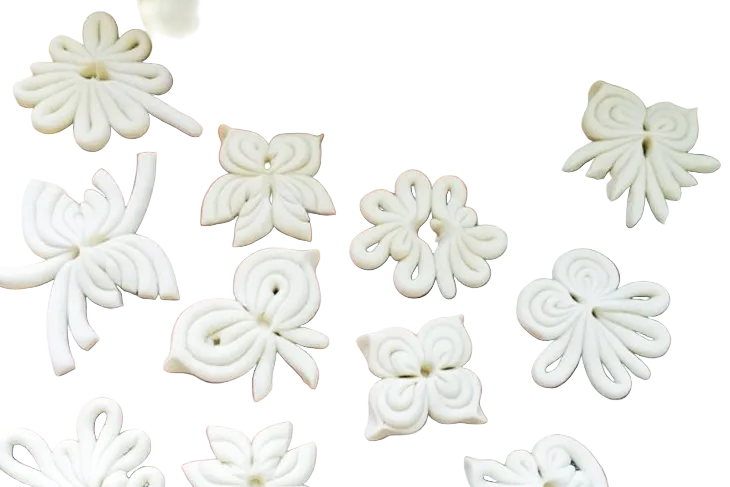
Hua Mo
Huamo (also known as huagao, or sculpted steamed buns) is a traditional craft that turns everyday dough into “edible folk objects.” It is commonly found in North China and along the Yellow River region, especially in seasonal festivals and ritual contexts—such as the Lunar New Year, weddings, birthday celebrations, a baby’s one-month ceremony, and ancestral offerings.
Working with fermented dough as their “clay,” makers shape forms through kneading, pinching, cutting, carving, attaching, pressing, and dotting, and embellish them with dates, beans, seeds, or colored dough. The resulting motifs—flowers, fish, qilin, dragons and phoenixes, pomegranates, and more—carry auspicious meanings of harvest, prosperity, continuity, and blessing. Huamo is both food and ritual gift: a symbolic system that preserves family memory and local aesthetics.
Rome ( 100 ~ now)
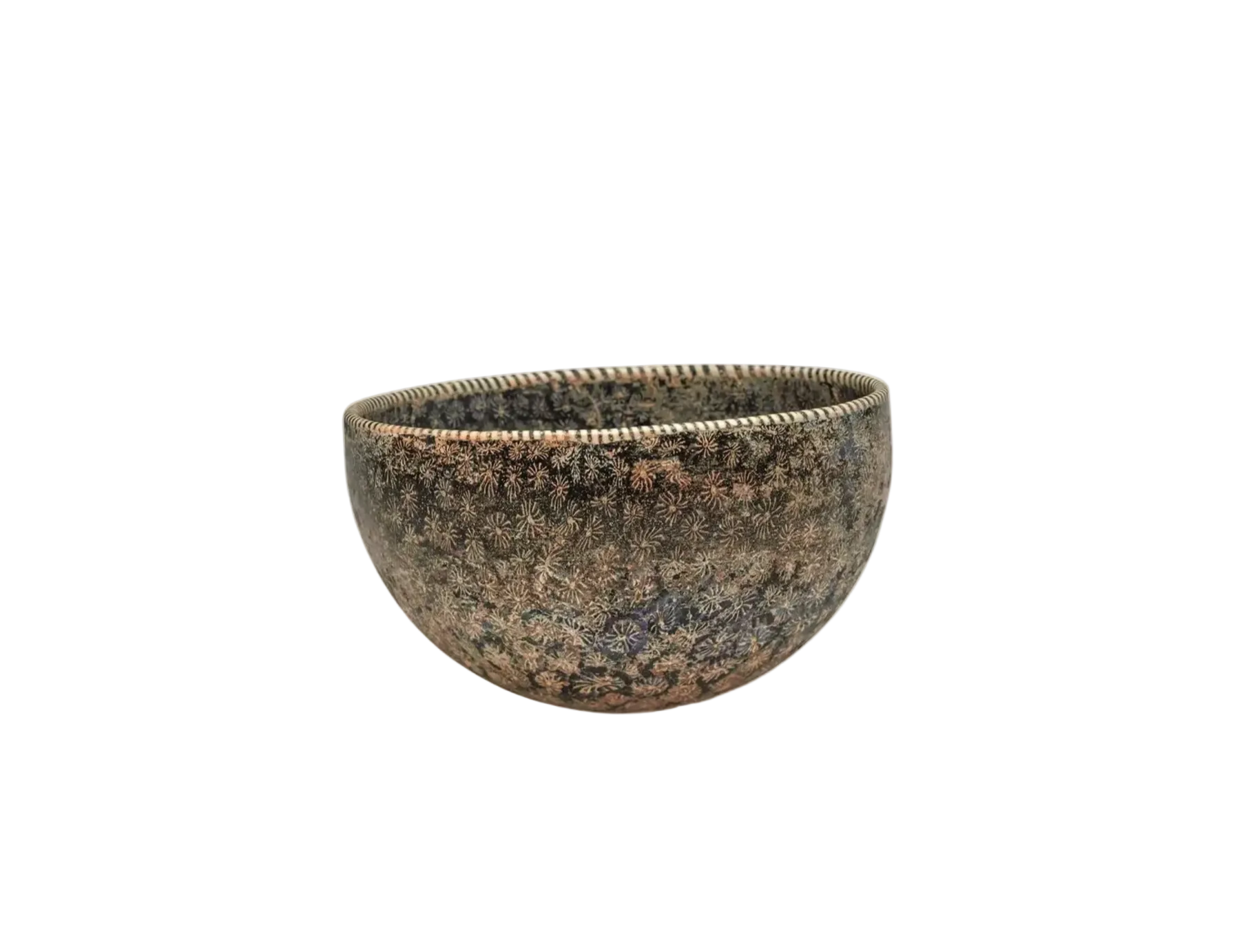
Millefiori
Millefiori glass is a technique that generates pattern through multicolored glass canes. Its origins can be traced back to ancient Rome around the 1st century BCE; it later developed through Byzantine and Islamic traditions, reaching a high level of sophistication by the 9th century.
Artisans first fuse differently colored glasses into patterned rods (canes), then slice them into thin cross-sections and reheat and fuse them during forming, embedding floral, star-like, and geometric motifs into the vessel surface or wall. With its dense, blooming imagery, millefiori is often regarded as one of the most decorative yet structurally ordered material languages in classical glassmaking.
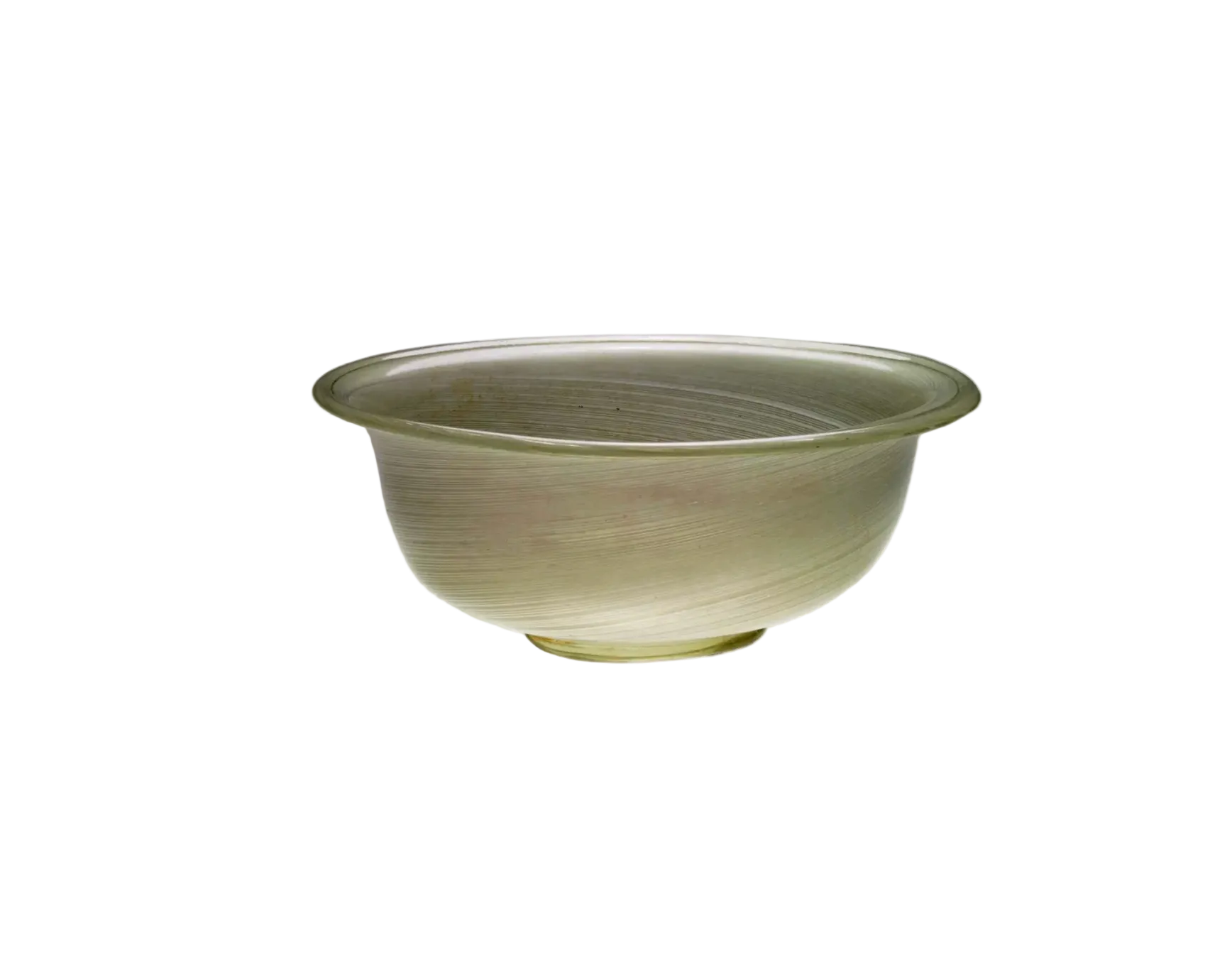
Venetian (16th-century)
Filigrana
“Filigree glass” uses clear glass as its base body. White or colored glass canes are arranged in parallel lines, spirals, or crossed lattice patterns, wrapped around a blown glass bubble, then reheated and blown again so the thread-like motifs fuse into the vessel wall.
Its origins can be traced to the 16th-century Venetian tradition of Filigrana, which developed a range of effects such as linear, twisted, and net-like patterns. During the Qing dynasty under the Kangxi, Yongzheng, and Qianlong reigns, Western filigree glass objects often entered the imperial court as tribute and diplomatic gifts. The term already appears in Yongzheng-period archival records, and the imperial glassworks under the Imperial Household Department also attempted production by referring to models such as the “white filigree cup.”
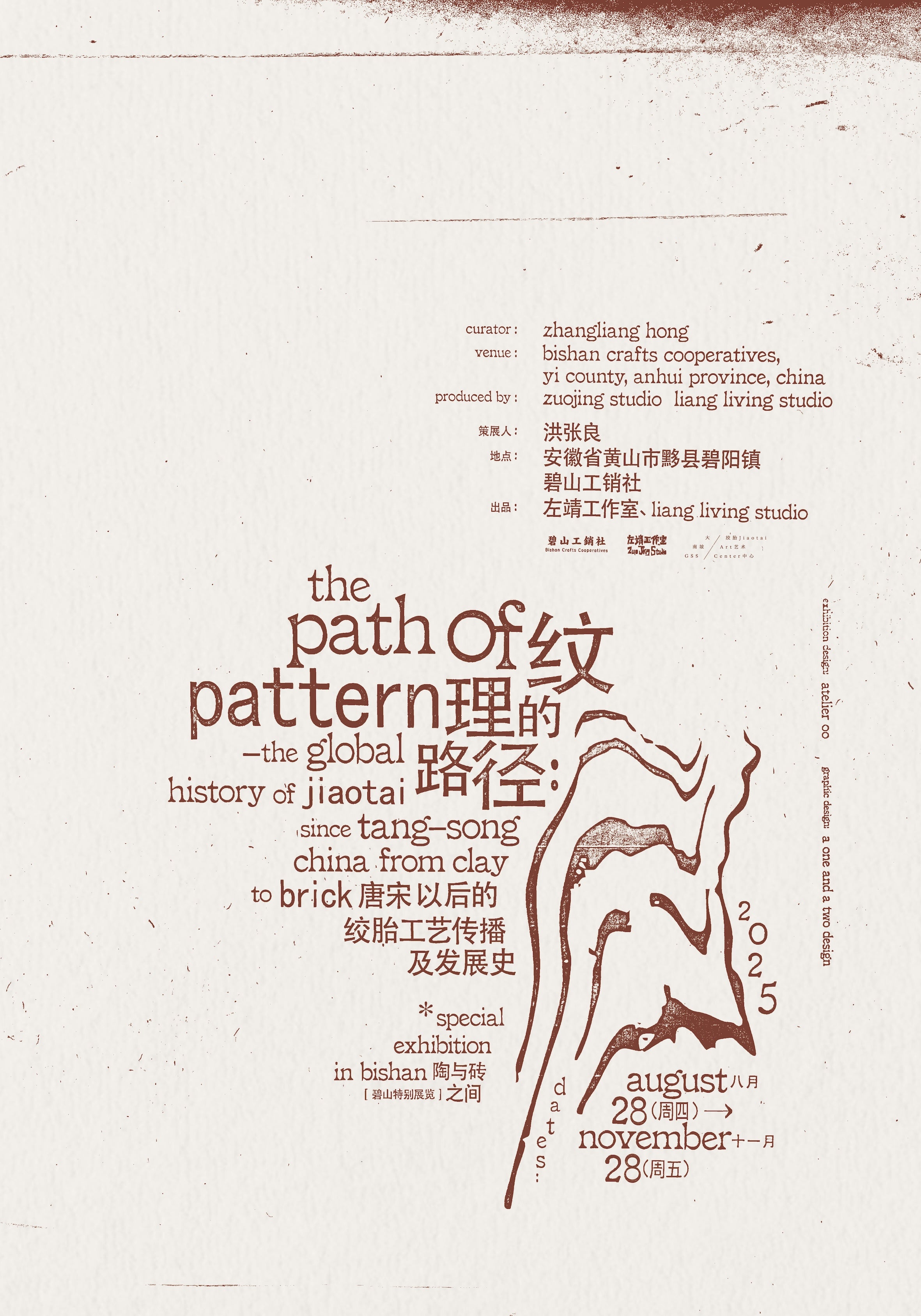
Between Ceramics and Brick is the first station of my interdisciplinary exploration of Jiao Tai. By placing Jiao Tai from Xiuwu, Henan, and patterned bricks (huazhuan) from Jingxian, Anhui, within the same frame, I aim to connect northern and southern craft narratives through two distinct yet related practices.
The project also asks an often-overlooked question of translation: after Jiao Tai gradually receded from prominence following the Song–Yuan period, why did it re-emerge in Jingxian in the form of architectural bricks? How did a craft logic once associated with courtly and aristocratic taste transform into a material system for building and everyday construction?
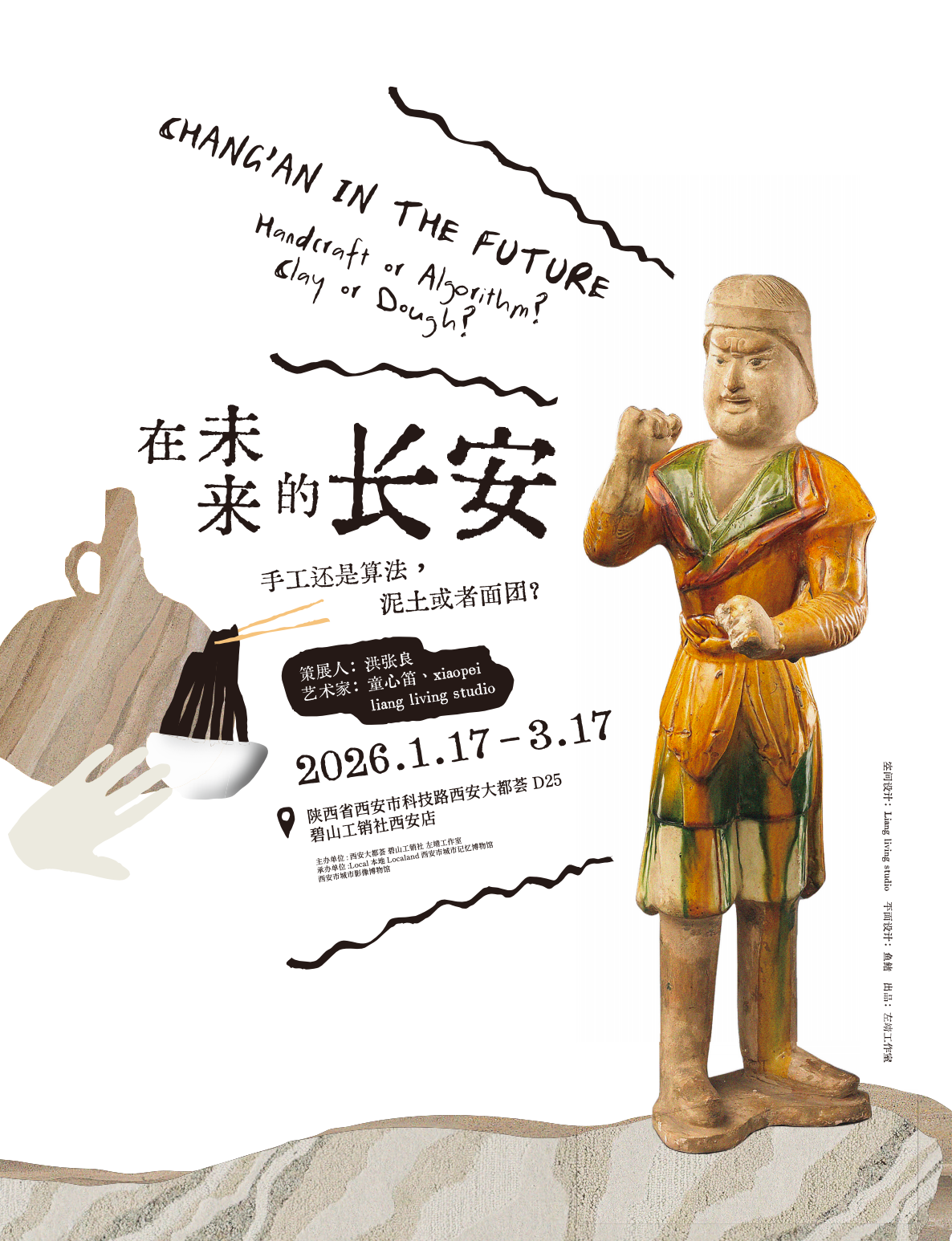
In the Future Chang’an is my second cross-media, interdisciplinary project, developed in Xi’an. For this exhibition, I invited artists Tong Xindi and Xiaopei to approach Jiao Tai through different entry points—Tang sancai, algorithmic logics, and food (dough) culture—opening up its historical resonances and contemporary imaginaries, and building new correspondences between material, technology, and everyday experience.
We frame “the future Chang’an” (the former capital of the Tang dynasty) as a speculative site and pose a set of questions: if these crafts and cultural practices were to enter the future, what forms might they take, and how might they change? And in the ways we reconstruct or extend them today, are we truly responding to—and carrying forward—the spirit and cultural inheritance of this ancient capital?
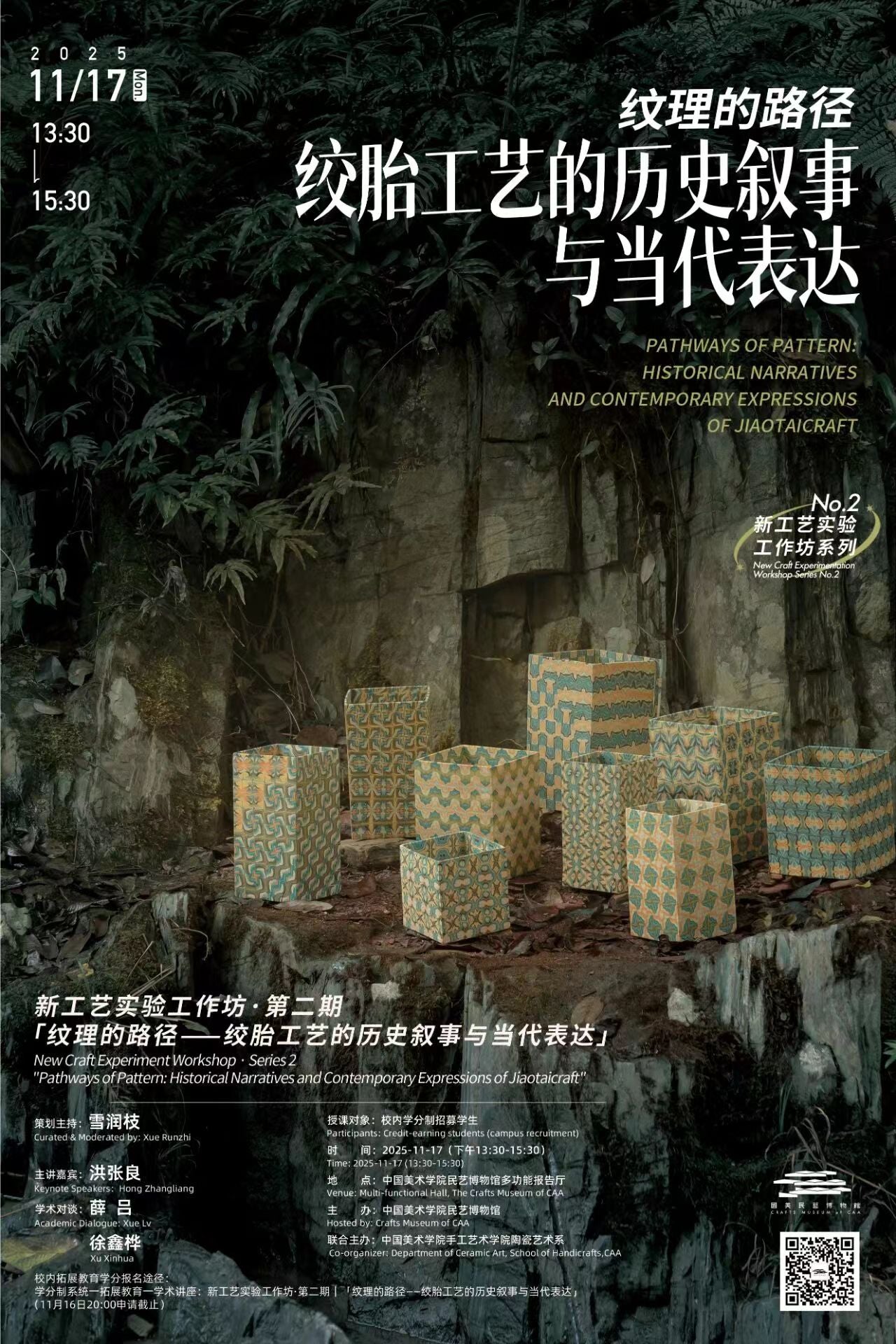
For this event at Craft Museum of CAA, I invited glass scholar Xue Lü for an interdisciplinary conversation. Xue Lü is the Curator for China at The Corning Museum of Glass and also serves as Director of the Glass Department at Shanghai University.
Starting from craft lineages such as core-forming, mosaic, and filigree glass, we discussed how glass and ceramics offer different interpretations of the idea of “Jiao Tai”: both point toward structure generated within the material, yet they unfold through distinct paths—hot and cold processes, transparency and opacity, optical effects and tactile experience.
By looking back through craft history and technical genealogies, our discussion also re-considered the contemporary significance of craft today—not simply as restoration, but as translation, re-narration, and a method for new making.
From Xiuwu: turning history into readable Patterns.
Let Jiao Tai’s aesthetic spirit return to its body.
A history of circulation—and an act of cultural re-narration.
From Jiao Tai, trace the roots of indigenous aesthetics.
Path of Patterns